Bakery Doughnut Guide: Freshness, Fillings, and Flavor
A doughnut seems like one of the simplest things a bakery makes, but the differences between a great one and a mediocre one are more specific than they might seem. Dough type, freshness, filling technique, and glaze balance all play a role. If you have been searching for a donut bakery near me and wondering what actually separates a memorable doughnut from a forgettable one, this guide breaks down the details worth paying attention to.
Doughnuts sit in an interesting spot within a bakery’s pastry case. They look simple, almost casual, next to more elaborate items like croissants or tarts, but getting them right requires just as much attention to technique, timing, and freshness.
Yeast-Raised vs. Cake Doughnuts: What’s the Difference
Not all doughnuts are built the same way, and the difference starts with the dough itself. According to the American Society of Baking, yeast-raised doughnuts rely on fermentation to create their light, airy texture, with the dough proofed before frying at a controlled oil temperature, typically in the range of 375 to 385 degrees Fahrenheit. This is what gives classic raised doughnuts, like glazed or jelly-filled varieties, their signature pillowy structure.
Cake doughnuts work differently. Instead of yeast, they rely on a chemical leavener like baking powder, which means the batter can be fried immediately without a proofing period. This produces a denser, sturdier doughnut with a more substantial bite, the kind typically found in old-fashioned or heavily spiced varieties. Neither style is inherently better. They are simply built for different textures, and a bakery that offers both is usually giving real thought to variety rather than defaulting to whichever style is easiest to produce in volume.
Why Freshness Matters More for Doughnuts Than Most Pastries
Doughnuts age differently than most other baked goods, and not always in an obvious way. Yeast-raised doughnuts tend to lose their light, airy texture within hours of frying, becoming noticeably denser as they sit. Cake doughnuts hold up a bit longer, since their sturdier structure resists staling for a slightly longer window, but neither type improves with time the way some bread does.
This is part of why a bakery that fries in smaller batches throughout the day tends to offer a meaningfully better doughnut than one that fries a large batch early and displays it for hours. If you are choosing between a few different bakery options, asking how recently the doughnuts were made is a reasonable question, not an unusual one. If you are also curious about how doughnuts compare to a bakery’s broader pastry lineup, Kneads’ own guide to the best pastries in Baltimore covers that wider range in more depth.
Fillings: What Makes a Doughnut Filling Work
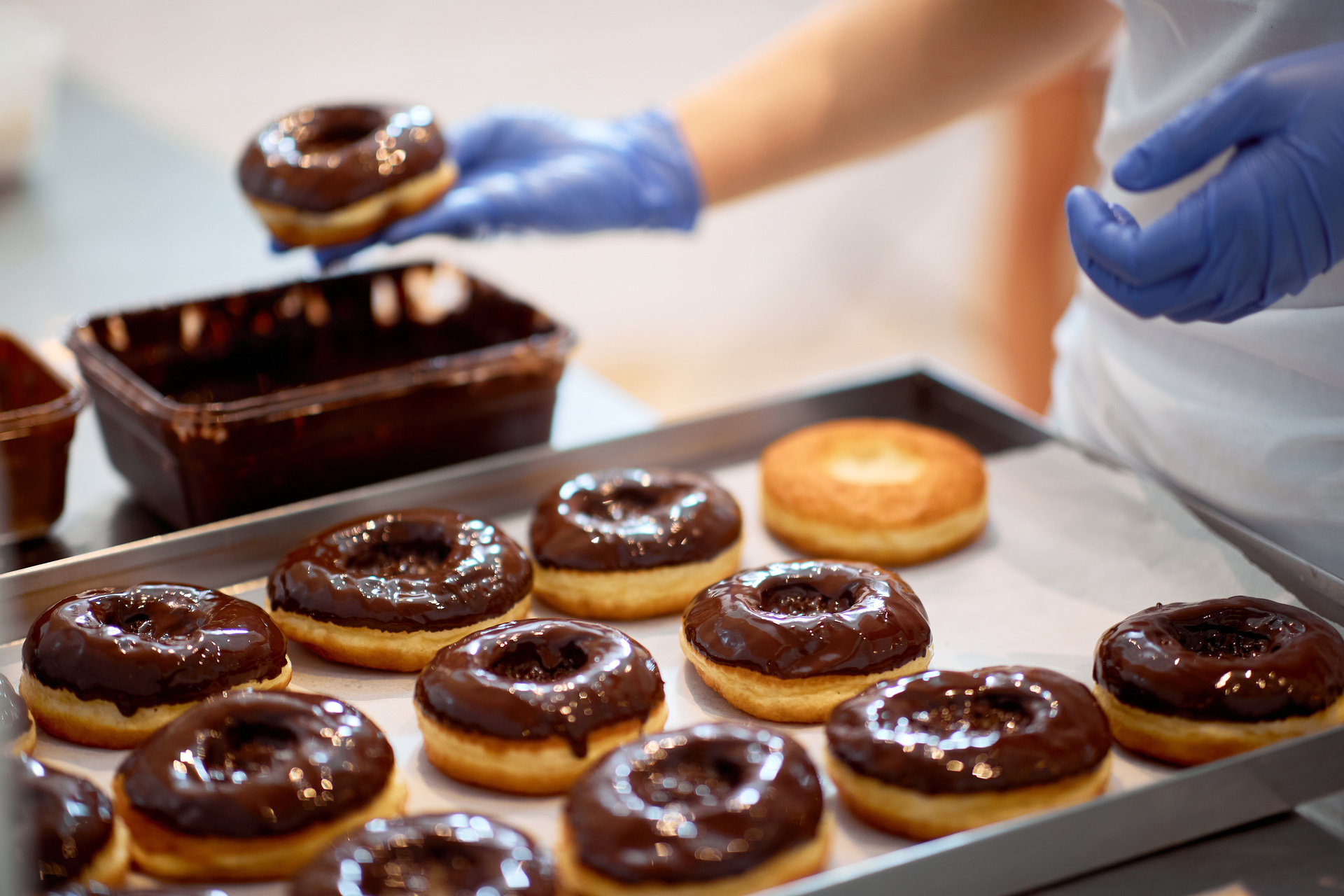
A well-made filled doughnut depends on more than just flavor. It depends on balance and technique. King Arthur Baking’s yeast-raised doughnut recipe outlines a straightforward approach: fry the doughnut first, let it cool, then fill it afterward, whether with jam, pastry cream, or a chocolate glaze finish. Filling a doughnut too early or while it is still warm can compromise its texture, since heat and moisture from the filling can make the surrounding dough go soggy faster.
A good filling should also be distributed evenly rather than concentrated in one small pocket. A doughnut where the first bite is all filling and the last bite is bare dough is a sign of a rushed or careless production process, not a deliberate design choice.
Glazes, Toppings, and Flavor Balance
Glaze exists to add sweetness and shine, but it is easy to get wrong in either direction. A glaze applied too thick can overwhelm the dough underneath, while one applied too thin barely registers. The best glazed doughnuts strike a balance where the glaze adds noticeable sweetness and a bit of textural contrast without masking the flavor of the dough itself.
Toppings work on a similar principle. Sprinkles, nuts, coconut, or drizzle patterns should complement the base doughnut rather than distract from it. A doughnut piled with toppings can look impressive, but if the dough underneath is mediocre, no amount of topping will fix that. The best doughnuts tend to use toppings as an accent, not as a way to cover up a weaker base.
Doughnuts and Coffee: A Classic Pairing
Few pairings feel as natural as doughnuts and coffee, and there is a practical reason behind it. A search for donuts and coffee near me often reflects exactly this instinct: a rich, bold coffee can cut through a doughnut’s sweetness, while the doughnut’s richness can soften coffee’s natural bitterness. This is especially true with darker roasts, which tend to stand up well against a heavily glazed or filled doughnut without getting lost.
Lighter, less sweet doughnuts, like a simple cake doughnut with cinnamon sugar, can pair well with a wider range of coffee styles, since they are not competing as intensely for the same sweetness territory.
What to Look For at a Pastry Shop Near You
If you are comparing options while searching for a pastry shop near me, a few details can help you judge doughnut quality quickly. Look for a glaze or coating that looks freshly applied rather than dried out or cracked, a dough that looks properly risen rather than dense or collapsed, and a case that is not overcrowded or sitting under harsh lighting for hours at a time.
If you want to see what is fresh before you commit, it is worth checking the current pastry case online, since doughnut selection can vary throughout the day depending on what has just come out of the fryer.
Frequently Asked Questions
What is the difference between a yeast doughnut and a cake doughnut?
Yeast doughnuts rely on fermentation for a light, airy texture, while cake doughnuts use a chemical leavener like baking powder, resulting in a denser, sturdier bite.
Why do doughnuts go stale faster than other pastries?
Doughnuts, especially yeast-raised ones, tend to lose their texture more quickly than bread or laminated pastries, which is why freshness and batch timing matter more with this category.
What makes a filled doughnut good?
Even filling distribution and proper timing, filling after frying and cooling rather than while the dough is still warm, are two of the most important factors in a well-made filled doughnut.
What coffee pairs best with a glazed doughnut?
A bolder, darker roast tends to balance a glazed doughnut’s sweetness well, though lighter roasts can work with less sweet doughnut styles.
How can I tell if a doughnut is fresh?
Look for a glaze or coating that looks recently applied, dough that looks properly risen, and a case that is not overcrowded or sitting out for an extended period.
A Simple Pastry With More Nuance Than It Gets Credit For
A great bakery doughnut is not an accident. It comes down to dough type, freshness, filling technique, and a glaze or topping that adds to the experience rather than covering up a mediocre base. Once you know what to look for, it becomes much easier to spot the difference between a doughnut made with care and one made purely for volume.
Next time you are craving something sweet, take a moment to consider the details before you order. It might change which doughnut you pick.