
Croissant-Making Class in Baltimore: Lamination, Shaping, and Proofing
Croissants look deceptively simple from the outside: a golden, crescent-shaped pastry that flakes apart in your hands. What most people do not see is the layering, folding, and patience required to get there. If you have been considering a croissant-making class in Baltimore, this guide walks through what actually happens during the class, from the first fold of butter into dough to the moment your croissants come out of the oven.
Unlike a quick demonstration, a good croissant class is a hands-on look at one of the more technical skills in baking. It rewards curiosity more than experience, and most instructors build the class around the assumption that you have never laminated dough before. For many people, it is also the first time they see how much deliberate technique goes into a pastry they have eaten dozens of times without a second thought.
What Happens During a Croissant Making Class
A croissant class typically opens with a short explanation of what makes croissant dough different from a standard bread dough. Rather than mixing everything and kneading it into a single mass, croissant dough is built in distinct layers of dough and butter, a process that gives the pastry its signature flaky texture.
From there, the class moves into hands-on work. Depending on where the dough is in its process when the class begins, you may work directly with a pre-laminated dough, learning to shape it, or you may get to see and participate in an earlier stage of the lamination itself. Either way, you will handle the dough enough to understand why croissant-making has a reputation for being one of the more demanding baking skills to learn.
Lamination: The Technique at the Heart of a Croissant
Lamination is the process of folding butter into dough in repeated layers, and it is what separates croissants from nearly every other baked good. King Arthur Baking’s guide to laminated dough breaks the process down into two components: the dough itself and the butter block that gets folded into it, repeated across several rounds of rolling and chilling.
Getting lamination right depends on temperature as much as technique. If the butter gets too warm, it melts into the dough instead of staying in distinct layers, and the croissant loses the flakiness that makes it worth making in the first place. If the dough gets too warm, the butter can push through and leak out during baking. Part of what a class teaches is how to recognize these signs early, rather than only finding out once the croissants are in the oven.
Shaping Croissants by Hand
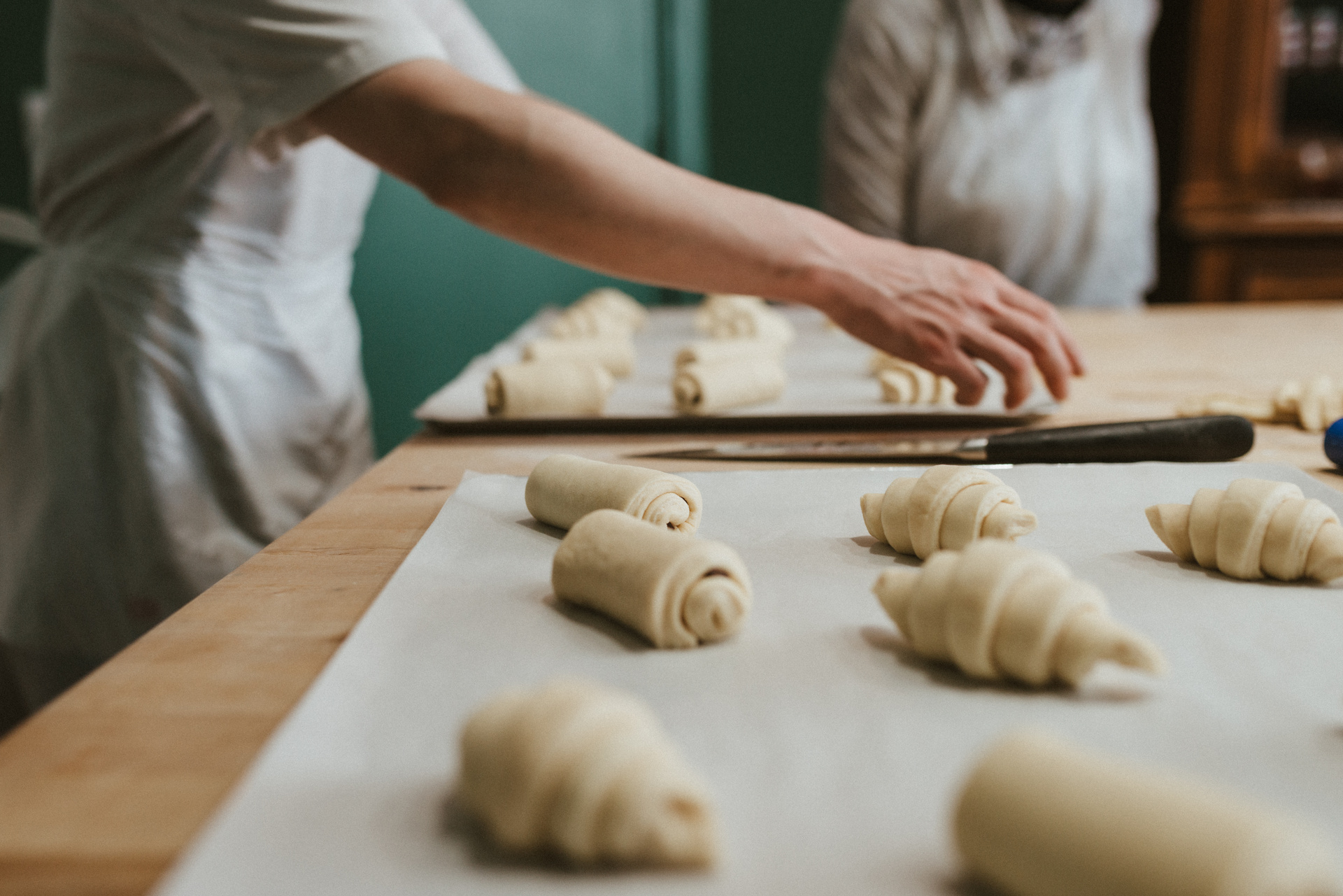
Once the dough is laminated and rolled to the right thickness, it gets cut into triangles and rolled into the familiar crescent shape. This step is often done as a group activity in a class setting, since shaping enough croissants for everyone benefits from more than one set of hands. King Arthur Baking’s croissant recipe outlines the shaping process step by step, including how to roll from a wide base to a narrow point so the layers stay visible once baked.
Shaping is also where small mistakes tend to show up. Rolling too tightly can compress the layers, while rolling too loosely can cause the croissant to unroll in the oven. An instructor walking the room during this step tends to catch these issues before they turn into a flat or uneven final pastry, which is part of why the hands-on setting works better for this particular skill than a written recipe alone.
Why Proofing Matters
Proofing is the final rise before baking, and it is easy to underestimate. A croissant that is under-proofed will bake up dense despite all the careful lamination and shaping that came before it. One that is over-proofed can lose its shape entirely.
A class typically covers how to judge proofing by look and feel rather than by the clock alone: the dough should look visibly puffier and slightly jiggle when the pan is nudged, without looking overblown or fragile. Learning to judge proofing this way is one of the more transferable skills from the class, since it applies to other yeasted baking as well, not just croissants.
How a Class Differs From a Croissant Guide
A written guide can explain what lamination, shaping, and proofing are supposed to look like, but it cannot put the dough in your hands. A class fills that gap. You get to feel the difference between a properly chilled butter block and one that has softened too much, watch how dough behaves under an instructor’s hands versus your own, and ask questions the moment something does not look right. That kind of real-time feedback is difficult to replicate outside of an in-person setting, which is part of why a hands-on class remains valuable even for people who have already read extensively about croissant technique.
Who a Croissant Making Class Is For
Croissant classes tend to attract people with a genuine curiosity about baking technique, not just people looking for a fun outing, though it works well for both. Complete beginners are welcome, and most instructors assume no prior experience with laminated dough.
Because the process involves teamwork at several points, from shaping to sometimes helping fold earlier stages of dough, croissant classes also work well for groups of friends or coworkers who want a shared activity rather than a solo lesson.
What to Expect When You Book
Most croissant classes handle ingredients and equipment for you, so the main thing to bring is patience and a willingness to get a little floury. A few practical notes:
- Class sizes tend to be kept small, since lamination and shaping benefit from close instruction.
- Classes are typically held at a specific Kneads location, such as Kneads Harbor East, so it is worth checking the Kneads locations page for the exact address before you head out.
- Some croissant classes include a complimentary beer or wine, which shifts the tone from a strict technical lesson toward a more relaxed evening out.
- Dates fill up a few weeks in advance, so checking current class availability ahead of time is the best way to plan around your schedule.
Frequently Asked Questions
Do I need baking experience to take a croissant making class?
No. Most croissant classes are designed for beginners, and instructors typically walk through lamination, shaping, and proofing without assuming prior experience.
Is lamination difficult to learn in a single class?
A single class will not make you an expert, but it is enough to understand the core technique and why each step matters, which is often the hardest part to grasp from a recipe alone.
What is the difference between this class and a croissant baking guide?
A written guide explains croissant technique, while a class lets you physically handle laminated dough, feel the difference between properly and improperly proofed dough, and get real-time feedback while shaping.
Are croissant classes good for groups?
Yes. The hands-on, sometimes team-based nature of shaping croissants makes the class a good fit for groups of friends or coworkers.
Will I take home the croissants I make?
This depends on the specific class format. In many cases, you will bake and enjoy your croissants as part of the class experience itself.
A Technical Skill Worth Learning by Hand
Lamination, shaping, and proofing are the three steps that separate a good croissant from a great one, and each is easier to understand once you have actually worked with the dough yourself. A hands-on class turns something that can feel intimidating on paper into a skill you can genuinely follow along with, fold by fold.
If learning to laminate, shape, and proof your own croissants sounds appealing, keep an eye on upcoming class dates to reserve a spot before they fill.